 By
By - 299


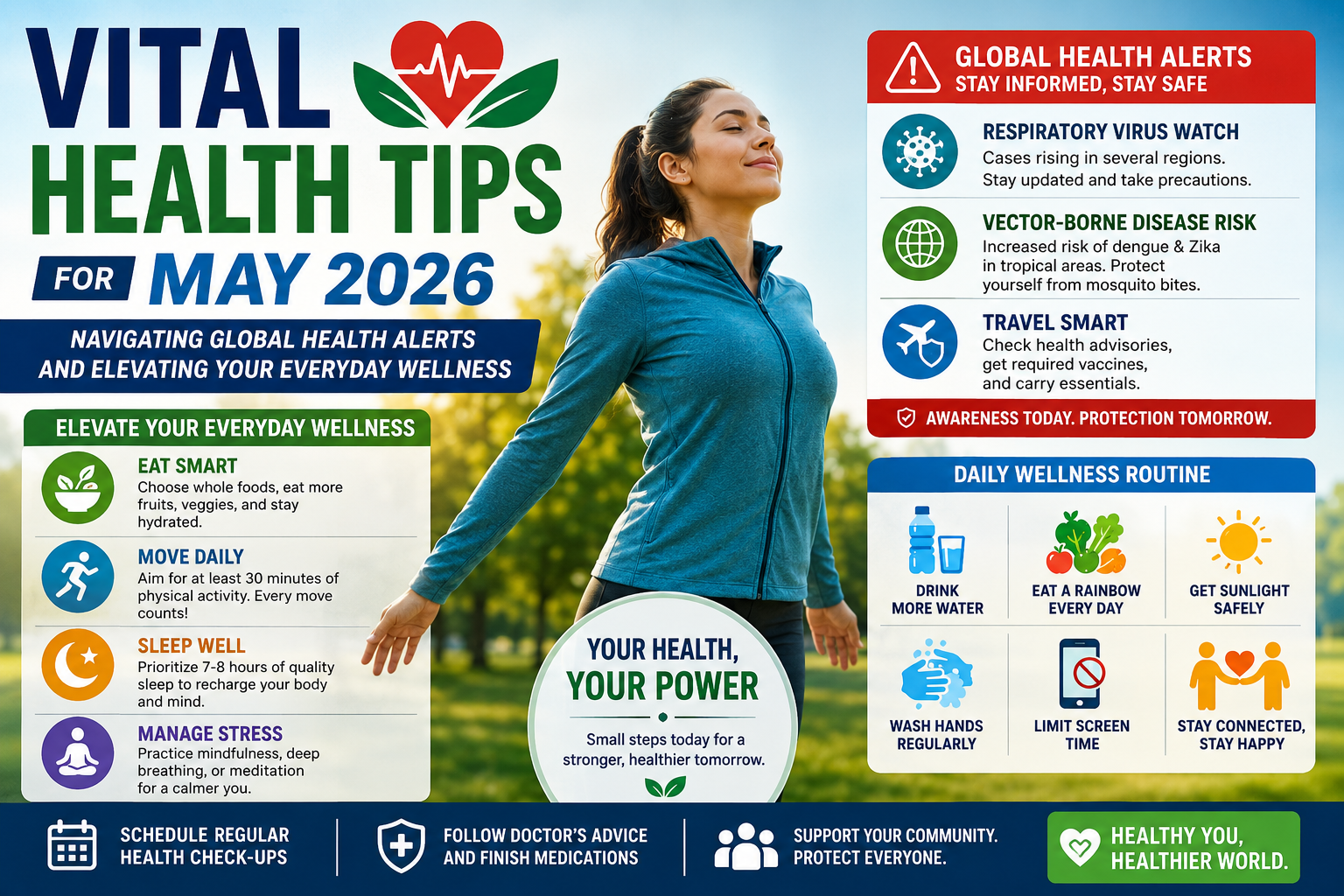
Health Tips
As we navigate through the spring of 2026, global health remains at the forefront of international news, making it more crucial than ever to stay informed and proactive about our personal well-being. Late May has brought a wave of significant public health developments that require both heightened awareness and practical lifestyle adjustments. Most notably, the World Health Organization (WHO) and the Centers for Disease Control and Prevention (CDC) have recently issued urgent health advisories regarding two major international outbreaks. An aggressive outbreak of Ebola disease, specifically caused by the Bundibugyo virus, has rapidly spread across the Democratic Republic of the Congo (DRC) and Uganda, prompting the WHO to declare it a public health emergency of international concern. Simultaneously, infectious disease experts are closely monitoring an unusual and severe cluster of Andes hantavirus cases linked to passengers aboard a transatlantic cruise ship. While the immediate risk to the general public in non-endemic countries remains relatively low, these compounding global health events serve as a stark reminder of how interconnected our world is. Staying healthy today is no longer just about hitting the gym or eating your greens; it requires a comprehensive approach that blends global situational awareness with rigorous personal hygiene, mindful travel practices, and a strong foundational immune system.
In light of these recent CDC health alerts, prioritizing travel health and infection prevention has become the absolute top priority for anyone planning international trips this season. If your upcoming summer plans involve overseas travel, the first and most vital step is to meticulously check the latest CDC Level travel notices and adhere strictly to all border health protocols. For regions currently facing the Bundibugyo Ebola outbreaks, authorities have strongly advised against non-essential travel and have implemented enhanced port-of-entry screenings. However, even if you are traveling to areas considered low-risk, practicing vigilant hygiene is non-negotiable. This means maintaining rigorous hand hygiene by washing with soap and water for at least 20 seconds or using an alcohol-based hand sanitizer frequently, especially in high-traffic transit hubs like airports and cruise terminals. Furthermore, the Hantavirus cluster—a virus typically spread by sylvatic rodents but uniquely capable of rare person-to-person transmission in the Andes variant—underscores the importance of avoiding contact with wild animals, rodent habitats, and enclosed, poorly ventilated spaces while abroad. Should you develop any symptoms such as sudden fever, severe muscle aches, gastrointestinal distress, or unexplained weakness within 21 days of returning from an international trip, it is imperative to isolate yourself immediately and contact a healthcare provider, ensuring you disclose your complete travel history before arriving at a medical facility.
Beyond navigating infectious disease alerts, optimizing your foundational daily health habits remains the most effective defense mechanism against illness and the key to a vibrant life in 2026. Health professionals this year are heavily emphasizing the profound impact of "micro-habits" over drastic, unsustainable lifestyle overhauls. Instead of committing to grueling hour-long daily workouts, try incorporating just 10 to 15 minutes of joyful movement into your daily routine—whether that is a brisk morning walk, a short yoga flow, or simple stretching at your desk. This consistent physical activity not only boosts cardiovascular health but has been clinically proven to significantly reduce the onset of depression and anxiety. Nutrition also plays a pivotal role in maintaining a robust immune system. Focus on integrating a diverse array of whole, plant-based foods, lean proteins, and healthy fats into your meals while consciously minimizing ultra-processed foods and refined sugars that trigger inflammation. Hydration is another frequently overlooked cornerstone of health; aim to drink water consistently throughout the day rather than waiting until you feel severely thirsty. By making these small, manageable adjustments—like cooking one extra meal at home per week or substituting a sugary beverage with a glass of water—you build a resilient physical foundation capable of warding off seasonal bugs and maintaining high energy levels.
Finally, as we observe Mental Health Awareness Month this May, it is vital to recognize that your emotional and psychological well-being is deeply intertwined with your physical health, especially during times of global health uncertainties. The barrage of alarming news regarding viral outbreaks and geopolitical tensions can easily trigger "headline anxiety," making it essential to curate your media consumption and set strict boundaries around screen time. Prioritizing a pristine sleep hygiene routine is one of the most powerful steps you can take for your mental health. Aim for seven to eight hours of uninterrupted rest by creating a dark, cool sleeping environment and eliminating electronic devices at least an hour before bedtime to allow your brain to decompress. If you find your mind racing at night, techniques such as cognitive shuffling, journaling, or guided breathing exercises can be incredibly effective in lowering cortisol levels. Additionally, fostering strong social connections and spending time outdoors in nature have been shown to drastically improve emotional resilience and combat feelings of isolation. Remember that taking care of your health is a holistic, ongoing journey. By staying informed about global health advisories, practicing smart hygiene, nurturing your body with the right fuel and movement, and protecting your mental peace, you can confidently navigate the complexities of 2026 while living your healthiest, most vibrant life. Always consult your primary care physician for personalized advice tailored to your unique health needs